
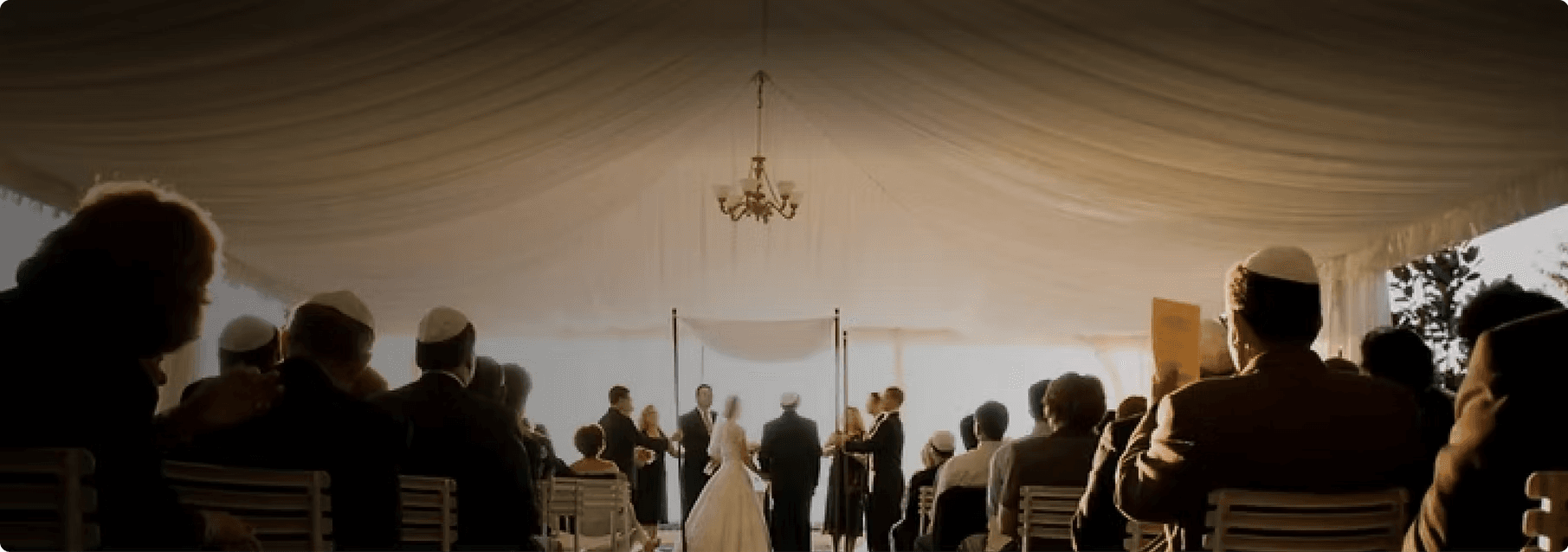
A Jewish wedding has a rhythm of its own. There is the quiet anticipation before the ceremony, the gathering beneath the Chuppah, the beauty of the blessings, the unmistakable sound of the glass breaking, and then the sudden rush of music and celebration. A well planned Jewish wedding program helps guests understand that journey without taking away from the emotion of the moment.
Whether you are planning a traditional ceremony, a modern Jewish celebration, or a wedding that brings together different backgrounds, your program can do more than list events. It can briefly explain meaningful traditions, introduce the people taking part, and give everyone a sense of what is coming next.
A Few Jewish Wedding Facts to Know
Jewish wedding traditions remain an important part of many couples' celebrations. Research on married Jewish couples found that 91% included the breaking of the glass, 90% included a Chuppah, and 88% included a Ketubah. The same research found that 75% included the Hora and 64% included the Sheva Brachot. These figures come from the Beyond Welcoming: Engaging Intermarried Couples in Jewish Life research report. (ResearchGate)
Those numbers show something important. There is no single way to create a Jewish wedding. Couples often choose the traditions that feel meaningful to them while building a celebration that reflects their families, personalities, and community. The ceremony itself also has a clear traditional structure. JSTORE explains that a traditional Jewish wedding has two main parts, Kiddushin, or betrothal, and Nissuin, or marriage. The Ketubah is generally read between these two parts, while the Nissuin ceremony includes the Seven Blessings, known as the Sheva Brachot. “Customs and Rituals of Marriage” in Jewish Marriage in Antiquity specifically examines Jewish marriage practices from betrothal through the wedding ceremony.
What Is a Jewish Wedding Program?
A Jewish wedding program is a printed or digital guide that tells guests what they are about to experience. It can include the couple's names, wedding date, location, ceremony order, wedding party, family acknowledgments, and short explanations of Jewish traditions.
Think of it as a friendly introduction to the ceremony.
Some guests may have attended dozens of Jewish weddings. Others may be experiencing a Jewish ceremony for the first time. A thoughtful program makes room for both groups. It gives familiar traditions a little more context while helping new guests follow along. A program does not need to explain every ritual in detail. Short, clear descriptions usually work best.
What to Include in a Jewish Wedding Program
The best Jewish wedding programs balance useful information with personality. You do not need to fill every inch of the page. Give guests the information they need, then leave room for a personal welcome.
Here are the main elements to consider:
A welcome message from the couple
The couple's names, wedding date, and location
The order of the Jewish wedding ceremony
Short explanations of important traditions
Names of the rabbi, cantor, musicians, family members, and wedding party
A thank you message for family and guests
Reception details, if helpful
A short note about the meaning of the Chuppah, Ketubah, Sheva Brachot, or breaking of the glass
You can also include a favorite Jewish saying, a meaningful Hebrew phrase, or a short family story. If you are planning an interfaith ceremony, the program can explain how both traditions are being honored.
Jewish Wedding Ceremony Program: A Simple Order
Your Jewish wedding ceremony program should follow the order guests will actually experience. Exact details can vary depending on the couple's community, officiant, and personal choices.
Ceremony moment | What guests can expect |
Ketubah signing | The couple signs the Jewish marriage contract with witnesses |
Bedeken | In many traditional ceremonies, the groom places the veil over the bride |
Processional | Family, wedding party, and the couple enter |
Chuppah | The couple stands beneath the wedding canopy |
Kiddushin | Blessings, wine, and the ring exchange begin the marriage ceremony |
Ketubah reading | The marriage contract is read |
Sheva Brachot | Seven blessings are recited over wine |
Breaking of glass | The ceremony close with the traditional g;ass breaking |
Yichud | The newly married couple spends a moment together |
This order is a useful starting point, but your officiant should confirm the exact sequence for your ceremony. Jewish wedding customs can differ between communities and movements.
Understanding the Main Jewish Wedding Traditions
The Ketubah
The Ketubah is the Jewish marriage contract. It is traditionally signed before the main ceremony in the presence of witnesses. Today, many couples also choose Ketubah designs and wording that reflect their relationship and shared values. Your program does not need to reproduce the full document. A simple line can explain that the Ketubah represents the couple's commitments to one another.
The Chuppah
The Chuppah is the canopy beneath which the couple is married. It creates one of the most recognizable moments of a Jewish wedding.
For your program, you might write:
"Under the Chuppah, surrounded by family and friends, the couple begins their life together."
That is enough. Let the moment speak for itself.
The Ring Exchange
The ring exchange takes place during Kiddushin. Depending on the couple's tradition, the ceremony may follow traditional wording or include additional personal vows and readings. If many guests are unfamiliar with Jewish customs, one short explanation can make this moment much easier to follow.
The Sheva Brachot
The Sheva Brachot, or Seven Blessings, are recited during the ceremony. They touch on themes including creation, joy, marriage, and the happiness of the couple. Family members and friends may sometimes be invited to participate. This is also a beautiful place to acknowledge the people who are helping shape the couple's new life together.
Breaking the Glass
Then comes the moment everyone recognizes.
At the end of the public ceremony, the glass is traditionally broken beneath the Chuppah. The custom has several explanations, including remembering the destruction of the Temple and bringing a sense of reflection into an otherwise joyful moment.
Your program can keep the explanation simple:
"The breaking of the glass reminds us that even in moments of great joy, we remember our history and the world around us."
Then comes the celebration.
Building a Jewish Wedding Timeline
A Jewish wedding timeline should account for both the ceremony and everything that happens around it. The exact timing will depend on your venue, guest count, traditions, and entertainment plans.
A practical wedding day might look something like this:
Guest arrival and welcome
Ketubah signing and pre ceremony traditions
Bedeken, if included
Ceremony under the Chuppah
Yichud
Cocktail hour
Grand entrance and first dance
Dinner and speeches
Hora and other Jewish dancing
Open dancing and celebration
Final music and send off
The ceremony may be the heart of the day, but the transition immediately afterward matters just as much. Guests move from a quiet, meaningful moment into a room filled with energy. That shift should feel natural rather than rushed. This is where music becomes especially important. If you are choosing music for each part of the celebration, our Sample Jewish Wedding Setlist: Chuppah and Dance Sets can help you think through the musical flow from ceremony to reception.
Planning the Hora and Reception Music
The Hora can completely change the energy in the room. Guests form a circle, dance together, and may lift the couple on chairs while the celebration builds around them. It can take place early in the reception or later, depending on the flow of the evening.
This is why your Jewish wedding timeline should not treat music as something that happens in the background. The band or DJ needs to know when the ceremony ends, when guests move to the reception, when dinner begins, and when you want the energy to rise. A strong musical plan allows each moment to feel connected.
For more ideas, explore our guide to What Is the Hora Dance at a Jewish Wedding and our Best Jewish Wedding Songs 2026 for inspiration.
Jewish Wedding Program Examples
Not every program needs to look traditional. Here are three simple directions you could take.
Classic and Elegant
Keep the design clean and focus on the ceremony order. Include the couple's names, date, location, officiant, wedding party, and short explanations of the main Jewish traditions.
Personal and Warm
Begin with a short message from the couple. Add a favorite family quote, explain why certain traditions were chosen, and include a thank you to parents, grandparents, and guests.
Modern and Minimal
Use a simple layout with only the essential ceremony information. Add a QR code leading to the full wedding website, music selections, reception details, or a longer explanation of the traditions. Whatever style you choose, make sure the program is easy to read. Guests should be able to glance at it during the ceremony without searching through large blocks of text.
How Music Fits Into the Jewish Wedding Timeline
Music should follow the emotional story of the day. Before the ceremony, softer music can create anticipation. During the Chuppah, the choices should support the emotion of the moment without competing with the ceremony. Then, after the glass breaks, everything can shift.
That contrast is part of what makes a Jewish wedding so powerful. We understand that transition at The Shuk Music Group. Our focus is on creating a musical experience that feels connected to the people, traditions, and energy in the room. A Jewish wedding can move from a quiet Chuppah to a packed dance floor in minutes, and the music should be ready for that change.
FAQS
What should a Jewish wedding program include?
At minimum, include the couple's names, date, location, ceremony order, officiant, and a short explanation of key Jewish traditions. You can also add the wedding party, family acknowledgments, and a personal message.
How long is a Jewish wedding ceremony?
The length can vary based on the traditions and personal elements included. Your rabbi or officiant can give you the most accurate estimate for your specific ceremony.
Should the Hora be included in the wedding program?
Yes, especially if some guests may not know what the Hora is. A short explanation can help everyone understand that it is a joyful Jewish dance and invite them to take part.
Do Jewish wedding traditions have to follow one exact order?
Not always. Traditions and ceremony details can vary between Jewish communities, families, and couples. Work with your officiant to confirm the order that fits your ceremony.
Make Every Moment Part of the Celebration
A great Jewish wedding program does more than tell guests what happens next. It gives them a window into the traditions, people, and meaning behind the celebration.
From the Ketubah and Chuppah to the Sheva Brachot, glass breaking, Hora, and final dance, every part of the day can feel connected. With thoughtful planning and the right musical flow, the room can move naturally from held breath to full celebration.
Ready to build a Jewish wedding experience your guests will remember?
Plan Your Jewish Wedding Music With The Shuk


