
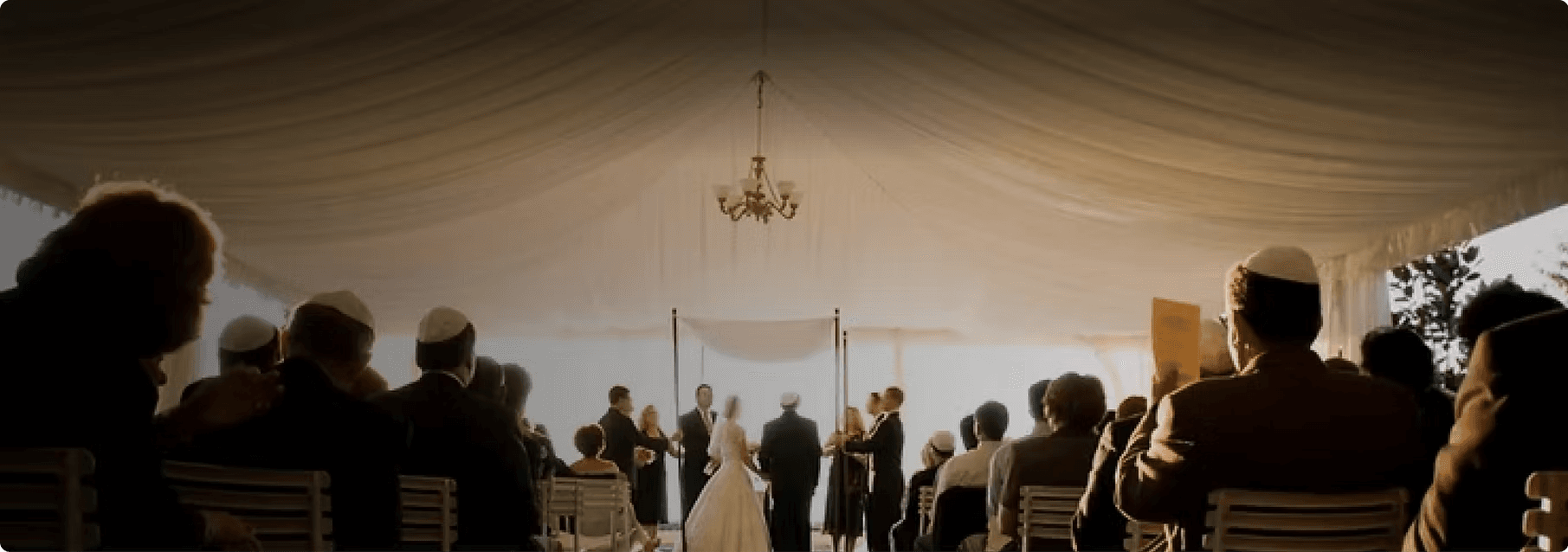
You are watching a Jewish wedding ceremony. The couple stands beneath the chuppah, the final blessings are complete, and the groom places a glass beneath his foot. One sharp crash later, the guests call out ‘Mazel Tov! If you have ever wondered why Jews break a glass at Jewish weddings, the answer goes beyond a memorable wedding moment. This custom connects Jewish history, remembrance, and the joy of beginning married life.
The ritual is one of the best-known parts of a Jewish wedding, but its meaning is not limited to a single explanation. For some families, it recalls a painful chapter in Jewish history. Others also see it as a reminder to value marriage and approach life with care.
The History Behind Breaking the Glass at a Jewish Wedding
The practice has its roots in Jewish rabbinic tradition. The Babylonian Talmud, notably Berakhot 30b to 31a, tells of wedding feasts where rabbis smashed expensive drinking cups to bring a festive meeting back to a more sober mood.
The idea was that even a happy occasion should leave room for reflection. In time, the practice acquired other meanings, including commemoration of the destruction of the Temple in Jerusalem.
According to Reform Judaism's explanation of the wedding tradition, the custom's exact origins are unclear. Different interpretations emerged over the centuries, and Jewish communities do not all explain the ritual in precisely the same way.
That history helps explain why the Jewish wedding tradition of breaking a glass remains meaningful today. A brief, dramatic act brings together the happiness of a couple and the collective memory of a people.
Why Do Jews Break a Glass at Jewish Weddings? Four Meanings Behind the Ritual
There is no single explanation accepted by every Jewish community. The following interpretations help explain why the ritual has remained part of so many wedding ceremonies.
1. To Remember the Destruction of the Temple in Jerusalem
One of the most popular explanations is that breaking the glass recalls the destruction of the Second Temple in Jerusalem in 70 CE. Jewish tradition allows remembrance even in times of greatest joy.
A wedding celebrates love, family, and a new beginning, but the broken glass reminds those present that sorrow and loss remain part of Jewish history. This does not mean the wedding should be a sad occasion. The ritual adds a moment of reflection to the celebration. It acknowledges that joy can be present in the act of remembering.
2. To Balance Happiness With Reflection
One of the happiest occasions in life is a wedding. Guests laugh, families celebrate, and the couple looks forward to a future. The broken glass is a signal of a short break before the celebration moves to its next phase.
This reading connects to the Talmudic stories about rabbis who broke expensive vessels at a wedding feast that became overly joyful. The act brought a moment of seriousness to the celebration. The lesson is not to run away from happiness. Instead, it suggests that you can celebrate and reflect at the same time.
3. To Recognize the Fragility of Relationships
Glass can shatter easily, which is why some couples see it as a reminder that relationships need care and attention. Some couples and families view the ritual as a reminder that marriage deserves attention, patience, and respect.
Love brings two people together, but a healthy relationship requires choices and effort on a daily basis. It’s a symbolic interpretation, not the only historical explanation for the practice. Still, it gives a personal meaning to the moment that couples can carry with them long after the wedding.
4. To Mark the Transition From Ceremony to Celebration
There is also a practical reason the moment stands out. The sound of the glass breaking signals that the formal ceremony has reached its conclusion. Guests respond with applause, shouts of “Mazel Tov,” and often music and dancing.
The shift can happen in seconds. A quiet gathering beneath the chuppah becomes a lively celebration, and everyone knows it is time to congratulate the couple.
For guests who have never attended a Jewish wedding, this sudden change can be especially memorable.
What Happens During the Glass Breaking Ceremony?
At a Jewish wedding, the glass breaking ceremony usually takes place toward the end of the service, after the wedding blessings. In many Ashkenazi weddings, the groom breaks a glass by stepping on it. Some couples choose to break the glass together instead.
The details depend on the couple’s family traditions and the customs of their Jewish community. The moment generally follows this order:
The couple stands beneath the chuppah, the canopy that represents their new home together.
The officiant finishes the prayers and wedding blessings.
A glass is placed under the groom’s foot, or prepared for the couple to break together.
Once the glass shatters, guests call out “Mazel Tov!” and congratulate the newlyweds.
What Kind of Glass Is Used at a Jewish Wedding?
You do not need an elaborate or expensive glass for this part of a Jewish wedding. Many couples use an ordinary drinking glass or cup that can break underfoot. Others prefer to choose something special for the occasion. What matters most is how the ritual fits into their ceremony and family traditions.
If you are choosing a glass for your wedding, keep a few things in mind:
Safety: Wrap the glass in a thick cloth or a protective pouch to contain the broken pieces. Check with your officiant about handling and cleanup.
Family customs: Ask your family or officiant whether there is a particular type of glass traditionally used in your community.
A keepsake: Some couples save the fragments after the ceremony as a reminder of their wedding day. If you plan to do this, make sure the pieces can be collected safely.
Why Does Everyone Shout “Mazel Tov” After the Glass Breaks?
“Mazel Tov” is a Hebrew expression commonly used to offer congratulations and good wishes. At a Jewish wedding, the broken glass provides a clear moment for guests to express their happiness for the couple.
The sound also marks the beginning of a different atmosphere. The ceremony gives way to embraces, photographs, music, and dancing. Music plays a particularly important role in many Jewish celebrations.
How the Tradition Fits Into a Modern Jewish Wedding
The glass breaking ritual remains familiar across many of these celebrations, although who breaks the glass and when it happens can differ.
It also offers a useful reminder for guests. You do not need to know every detail of Jewish history to appreciate the moment. Understanding its possible meanings helps you see why a simple act can carry so much significance.
For couples planning their celebration, it is worth discussing the ceremony with the rabbi or officiant, especially if family members come from different Jewish traditions. You can clarify the order of events, choose a suitable glass, and decide how the moment will lead into the reception.
The same attention to cultural detail matters when choosing entertainment. A band familiar with Jewish wedding customs can help manage the transition from the chuppah to the dance floor while respecting the meaning of the ceremony.
Bring Your Jewish Wedding Celebration to Life
The glass may break for only a second, but what follows can fill the room with music, laughter, and dancing. The right entertainment helps keep that energy flowing through the reception, while keeping the celebration connected to its cultural roots.
At The Shuk, we perform at weddings and other celebrations, providing live music experiences built around each event and its guests, with authentic Jewish and Israeli musicianship. Planning a wedding? Check out our Jewish wedding band services and start planning the celebration you have in mind.
FAQs
Why Do Jews Break a Glass at Jewish Weddings?
The ritual has a number of interpretations. It is usually linked to the commemoration of the destruction of the Temple in Jerusalem. Other explanations interpret it as a means of balancing joy with reflection.
Who Breaks the Glass at a Jewish Wedding?
In many traditional ceremonies, the groom will break the glass with his foot. Some couples break it together depending on their preferences and community customs.
What Does the Broken Glass Symbolize?
It can be a symbol of memory, of reflection, and of the fragility of relationships. The meaning is different in each Jewish tradition and family.
What Happens After the Glass Breaks?
Often the guests yell “Mazel Tov!” and congratulate the couple. The ceremony generally flows into the reception where the music, dancing, and celebration begin.
Is Breaking the Glass Required at Every Jewish Wedding?
No, the custom is not followed uniformly at all Jewish weddings. Different faith communities, families, and couples have different practices, so couples may want to discuss the ritual with their rabbi or officiant before the ceremony.


