
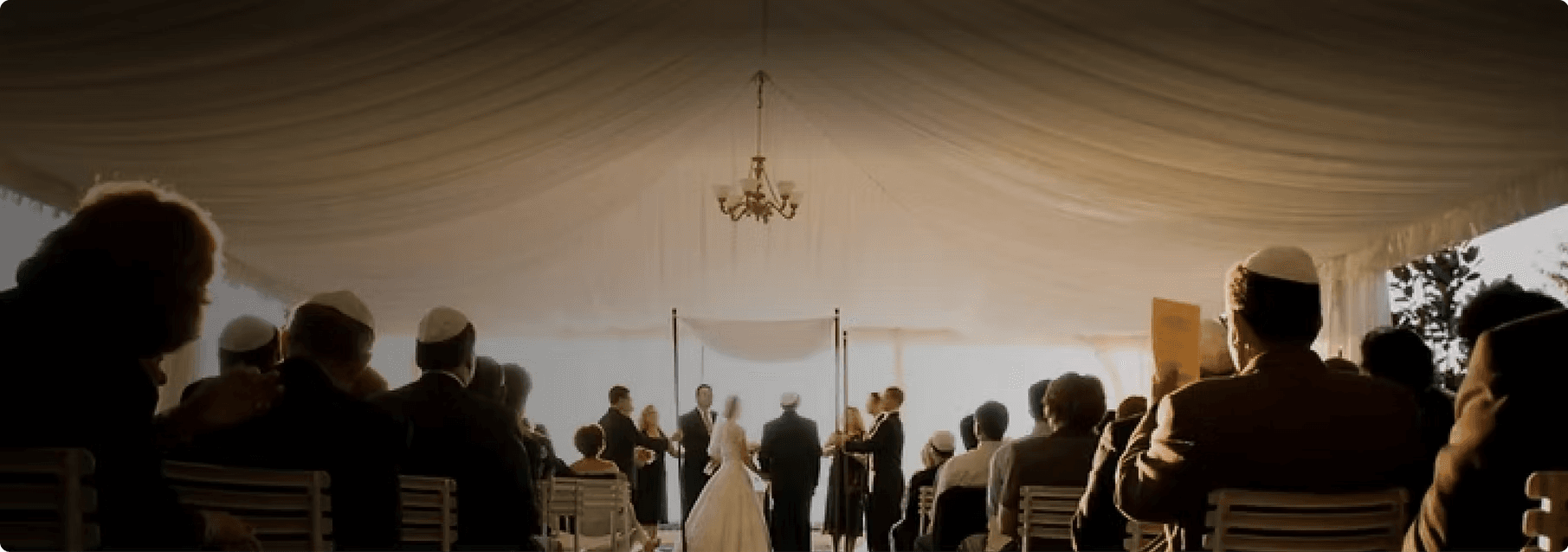
There is a moment at every great Jewish wedding when the evening stops being a reception and becomes something else entirely. Jackets come off, someone pulls grandmother onto the dance floor, a circle forms, chairs rise and suddenly a room full of people who arrived as guests are dancing like they have known each other their whole lives.

That moment - electric, joyful, and unmistakably Jewish - does not happen by chance. It happens because of the dance traditions that have been at the heart of Jewish celebration for generations.
Whether you are planning your own celebration or attending a Jewish wedding for the first time, understanding the dances and the music behind them makes the whole experience richer.
This guide walks you through the most beloved traditional jewish wedding dances, what they mean, how they work, and how the right music brings each one to life in a way that guests carry home with them long after the night is over.
The numbers tell us just how central music and movement are to modern celebrations. According to latest studies, 35% of couples now choose live bands over DJs to create a more unique and memorable guest experience. For Jewish couples, this is not a trend - it has always been the tradition.
The Hora: The Dance That Defines the Night
If you ask anyone who has attended a Jewish wedding what they remember most, the answer is almost always the same: the hora. The hora dance jewish wedding tradition is the emotional centerpiece of the reception - the moment when every generation joins hands in a circle, the music rises, and the couple is lifted high above the crowd on chairs, holding a napkin between them as a symbol of their new union.
The hora has a fascinating origin. It was not originally a Jewish dance - it came from Romanian and Balkan folk tradition and was adopted by Zionist pioneers in Palestine in the early 20th century, first performed to welcome Jewish settlers in 1924. Over time it became inseparably linked with Jewish celebration worldwide. Today it is the most recognized of all jewish wedding dances, and the moment the first notes of 'Hava Nagila' ring out, every guest knows exactly what comes next.
The basic step is simple: face the center, move to the left with right foot forward, left following. But technique matters far less than energy. In Orthodox communities, men and women dance in separate circles. In more liberal settings, everyone dances together. Either way, the experience is the same - pure, communal joy.
Traditional Jewish Wedding Dances Beyond the Hora
The hora is the most iconic, but it is far from the only dance tradition woven into a Jewish wedding. Understanding the full landscape of jewish wedding dances helps you plan a reception that moves through meaningful moments from the first song to the last.
Dance | Who It Honors | When It Happens | What Makes It Special |
Hora | The couple and all guests | Early reception, after first dances | Circle dance with chair lifting - the iconic Jewish wedding moment |
Krenzl | Mother of the last child to marry | Later in the reception | Guests dance around the mother and crown her with flowers |
Mezinke Tanz | Parents who have married off their last child | Toward the end of the night | Parents sit in chairs while guests dance around and kiss them |
Mitzvah Tantz | The bride | During or after the hora | Guests hold one end of a gartel for the bride to dance with, honoring her |
First Dance | The couple | Opening of the reception | The couple's first dance as a married pair - sets the emotional tone |
The Krenzl and Mezinke Tanz: Honoring the Parents
Two of the most touching traditional jewish wedding dances are the ones that shift the spotlight from the couple to their parents. The Krenzl (Yiddish for 'crown') honors the mother of the last child in the family to be married - she is seated in the center while friends and family dance around her, crowning her with flowers. The Mezinke Tanz does the same for both parents who have married off all of their children, with guests circling them in dance, offering kisses and congratulations.
In both traditions, the message is the same: the wedding is not just a celebration of the couple. It is a celebration of the families who brought them here. Performed to the right klezmer melody, these dances become some of the most emotionally resonant moments of the entire evening.
Building Your Jewish Wedding Music Playlist
The dances only work as well as the music driving them, which is why building the right jewish wedding music playlist is one of the most important planning decisions a couple makes. Each dance has its own musical character, and getting those transitions right - from the ceremony's tender melodies to the hora's explosive energy to the quieter emotional pull of the Mezinke Tanz - is what separates a good reception from an unforgettable one.
'Hava Nagila' is the most universally recognized hora song, and for good reason: its rising energy and unmistakable melody pull even the most reluctant guests onto the floor. But a skilled band builds the hora set far beyond a single song, weaving in Israeli folk anthems like 'Am Yisrael Chai,' contemporary hits with Hebrew lyrics, and Mizrahi or klezmer melodies that reflect the couple's specific heritage. The Top Jewish Wedding Songs That Get Everyone on the Dance Floor is a great resource if you are building out your list and looking for inspiration beyond the classics.
A thoughtful jewish wedding music playlist also thinks beyond the dance floor. The processional, the Bedeken, the moments between dances - each one benefits from music that holds the emotional register of the occasion. This is where experienced live musicians earn their place, reading the room and adjusting in real time in ways no pre-built playlist can.
Live Music vs. Playlist: What Makes the Difference
You can put together a wonderful Jewish and Israeli Music playlist for any part of the evening, but there is something a live band does that recorded music simply cannot. They feel the room. When the hora is building and the crowd's energy is rising, a great band pushes harder, speeds up the tempo, and holds the moment longer. When the Mezinke Tanz calls for something gentler, they shift without being told. That responsiveness is the difference between music that plays at a celebration and music that creates one.
A best jewish wedding band also brings genuine cultural fluency to the repertoire. They know which songs belong to which dances. They understand when to honor the traditional form of the hora dance jewish wedding and when to surprise guests with a contemporary twist that keeps younger people on the floor. Finding musicians with that combination of cultural knowledge and musical range makes every dance more meaningful and every transition seamless.
Here are the qualities worth looking for when choosing live entertainment for your reception:
Experience performing specifically at Jewish weddings, not just general event experience.
A deep and flexible repertoire spanning Ashkenazi, Sephardic, and Israeli styles.
The ability to read a multigenerational crowd and adjust the set in real time.
Familiarity with the specific dances - hora, Krenzl, Mezinke Tanz - and how to lead them musically.
Making Every Guest Part of the Celebration
One of the most beautiful qualities of jewish wedding traditions is how inclusive they are by design. The hora asks nothing of its participants except enthusiasm. Children skip alongside grandparents. Non-Jewish guests who have never seen a circle dance before find themselves holding hands within moments of the music starting.
If your guest list includes people unfamiliar with the dances, a brief note in the program or a warm invitation from a family member is all it takes to bring everyone in. No one should feel like an outsider, and the right band will make sure they do not.
The Shuk Music Group brings exactly this spirit to every performance - deep cultural knowledge, genuine warmth, and the musical range to guide a room of guests through every dance tradition from first song to last hora.
The Dance Floor Is Where the Night Lives
A Jewish wedding gives you something no generic reception format can: a full, rich arc of dance traditions, each one carrying its own meaning and its own emotional weight. From the tender first dance to the explosive communal hora, from the heartfelt Krenzl to the joyful chaos of the open dance floor, the dances are what guests remember. Plan them with intention, choose your music carefully, and find the best jewish wedding band that can bring each moment to life. When everything comes together, the dance floor becomes the place where your wedding truly happens.
Ready to Plan the Perfect Jewish Wedding Dance Experience?
Connect With The Shuk Music Group Today
FAQs
Q.1 What is the hora and why is it so important at Jewish weddings?
The hora is a circle dance with Romanian and Balkan origins that became a central tradition of Jewish celebration in the early 20th century. At a Jewish wedding, it is the moment when every guest joins hands and dances together while the couple is lifted on chairs above the crowd, symbolizing community support for the new marriage. It is widely considered the most joyful and memorable moment of the entire reception.
Q.2 What is a good Jewish wedding music playlist for the hora?
'Hava Nagila' is the essential starting point, but a great hora set builds far beyond one song. A skilled band weaves in Israeli folk anthems, contemporary hits with Hebrew lyrics, and melodies drawn from the couple's specific cultural background - Ashkenazi, Sephardic, or Mizrahi. Explore Top Jewish Wedding Songs That Get Everyone on the Dance Floor for a curated list to get you started.
Q.3 Do non-Jewish guests need to know the steps to join in?
Not at all. The beauty of the hora is that it is designed to be accessible to everyone. The basic movement is a simple circle step, and many guests find themselves participating naturally within moments of the music starting. A warm invitation from a family member or band leader is all it takes to bring even first-timers onto the floor with confidence.
Q.4 When in the reception should the hora happen?
Most couples schedule the hora early in the reception, typically after the first dance and parent dances, before dinner is served. This keeps the energy high at the start of the evening and ensures guests have the stamina to fully enjoy it. That said, some couples prefer to do the hora after dinner to build toward a late-night crescendo - either timing works, as long as your band knows the plan in advance.


