
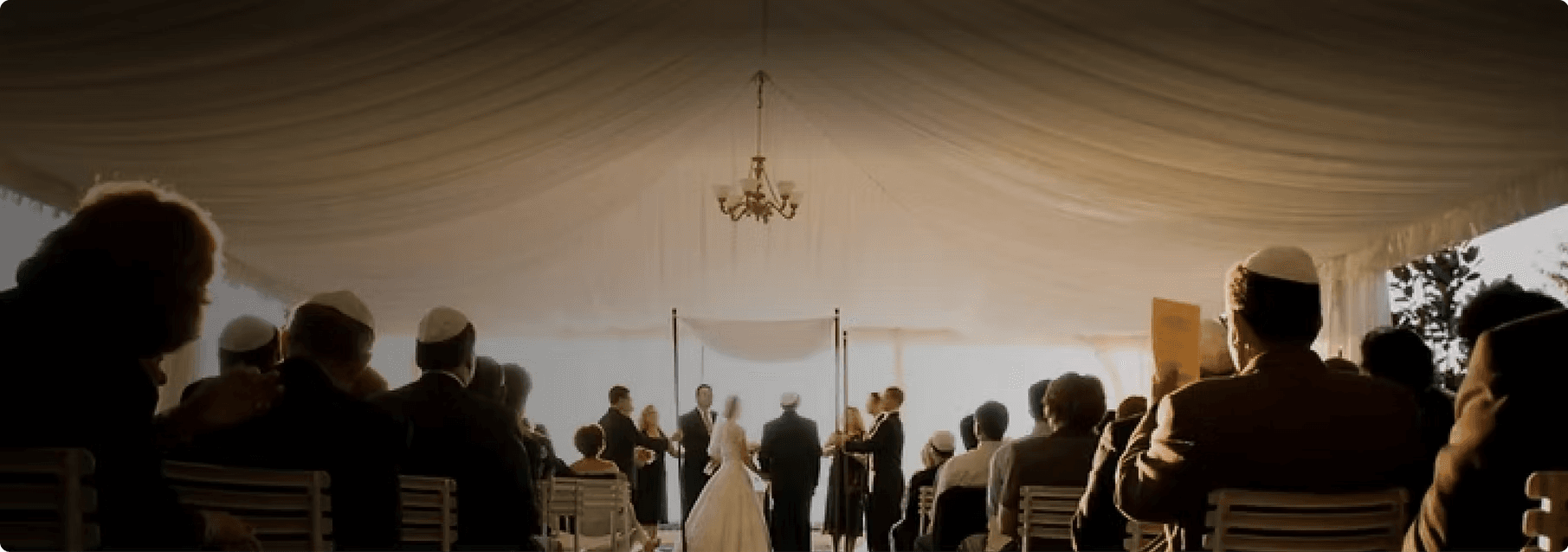
A Jewish wedding is not just a single moment or a simple event marked on the calendar. It’s a living experience shaped by ritual, movement, music, and collective fun. Every moment ranging from quiet anticipation before the start of the ceremony to the vibes of celebration on the dance floor, is guided by tradition and intention.

For modern couples of today’s world, planning both key parts of understanding Jewish wedding traditions and honoring Jewish wedding customs often means to balance the heritage with a touch of their own style. The third main part of a Jewish wedding is thoughtfully selecting Jewish wedding music which allows both the couple and the guests to create a celebration that will forever resonate in their memories, feeling timeless with a deep meaning,
Our complete guide explores the full arc of a Jewish wedding, from ceremony to reception, with special attention to the role of music, which plays in transforming meaningful traditions into timeless moments.
The Meaning Behind the Jewish Wedding Ceremony
The Jewish wedding ceremony is a very sacred covenant, one that brings together families, faith, and overall community. Though customs can vary across Sephardi, Ashkenazi, and Mizrahi backgrounds, the ceremony follows a structure that has remained remarkably consistent for centuries. At its core, ceremony is definitely not a performance, it is a spiritual commitment witnessed by gatherings of loved ones, friends, guided by the traditional values and lifted through music. So, what are the core elements of the Jewish Ceremony?
Core Elements of the Ceremony
The core elements of the ceremony consist of, The Chuppah, Sheva Brachot, Circling Rituals, and Breaking the Glass.
The Chuppah
The Chuppah symbolizes the home the couple will build together. Open on all sides, it represents openness, hospitality, and shared life. The simplicity of the structure allows meaning to take center stage.
Sheva Brachot
The Seven Blessings celebrate love, joy, companionship, and continuity. These blessings connect the couple’s union to generations past and future. Live music during these moments adds warmth and resonance, helping guests feel fully present.
Circling Rituals
In many traditions, one or both partners circle the other, symbolizing protection, unity, and the creation of a shared spiritual space. This moment often feels deeply intimate, and carefully chosen music enhances its emotional weight.
Breaking the Glass
The ceremony concludes with the breaking of the glass, a reminder of life’s fragility even in moments of happiness. Immediately afterward, music shifts from reverence to celebration, marking the transition into joy.
The moments from each of these elements are benefitted from the musicians or music bands who understand tone, meaning, and pacing, not just a few notes.
Jewish Wedding Traditions Before the Ceremony
Now that we are familiar with Core Elements of a Jewish wedding, our attention focuses on the traditions that are eld before the start of the ceremony. Long before guests take their seats, Jewish wedding traditions are already shaping the day’s emotional environment. The traditions are Kabbalat Panim and, The Ketubah Signing:
Kabbalat Panim
Kabbalat Panim is the welcoming gathering held before the ceremony. Guests mingle, reconnect, and ease into the celebration. Traditionally, the bride and groom greet guests separately, allowing for moments of calm and reflection before the ceremony begins. Live music during Kabbalat Panim sets the tone. A refined Jewish wedding band performing instrumental or acoustic selections creates an atmosphere that feels warm, intentional, and elevated.
The Ketubah Signing
The signing of the Ketubah is both legal and symbolic. This document outlines the couple’s commitments and responsibilities to one another. Though often private, the presence of live music nearby helps maintain emotional continuity throughout the day.
Why Music Is Central to Jewish Weddings
Music is never just a background noise at a Jewish wedding. It serves as a guide, signaling transitions, elevating and uniting guests across generations.
A Jewish wedding music serves multiple roles like;
It marks sacred moments of the wedding.
It invites communal participation.
It sustains emotional momentum.
It transforms traditions into live experience.
From the first notes ever played, to the final song of a beautiful night, music shapes how the moments and experience of the wedding is remembered.
Ceremony Music: Creating Sacred Space Through Sound
Ceremony music requires restraint, sensitivity, and cultural fluency. The goal is not to impress, but to support the moment. Common ceremony music choices include:
Instrumental Hebrew melodies for processional entrances
Soft vocal selections during circling or blessings
Joyful, rhythmic music for the recessional
A seasoned Jewish wedding band understands when to lead and when to recede. This balance allows the ceremony to feel fluid rather than staged.
The Jewish Wedding Reception: Celebration in Motion
If the ceremony is sacred, the Jewish wedding reception is a release of joy. This is where music becomes physical, drawing guests into movement, laughter, and connection. Which brings us to one of the main elements of the night:
The Hora
The Hora is often the emotional centerpiece of the reception. Guests form circles, lift chairs, and celebrate together in a powerful display of communal joy.
Live music is essential here. The tempo, rhythm, and energy must respond to the crowd in real time. Traditional melodies blend seamlessly with modern Israeli and Hebrew songs, creating a momentum that feels infectious.
Beyond the Hora
A thoughtfully planned reception includes a wide musical range:
Traditional Jewish dance music.
Modern Hebrew and Israeli favorites.
Beloved Jewish wedding songs passed down through generations.
Contemporary selections that reflect the couple’s personality.
The goal is inclusivity. Music should invite participation from grandparents to friends, creating a shared experience rather than isolated moments.
Choosing the Right Jewish Wedding Band
So, to honor the traditions, culture, customs, etc; how do you choose the right Jewish band for your wedding? Just keep in mind that your band is not simply entertainment. They are emotional architects.
What Truly Matters
Cultural Understanding
A band must understand Jewish wedding customs deeply. Knowing when to heighten energy and when to soften it is crucial.
Musical Versatility
From ceremony to cocktail hour to full dance floor, flexibility is key.
Experience with Jewish Weddings
Timing, transitions, and coordination with planners and officiants require experience.
Personal Connection
Your music should reflect your story. The right band listens, collaborates, and adapts.
The Shuk: Rewriting The Jewish Wedding Music Experience
For couples seeking musical excellence rooted in tradition and elevated by modern artistry, The Shuk has become a defining presence.
NYC-based and performing across major U.S. cities and select destination weddings, The Shuk brings together world-class musicians with deep cultural fluency. Their performances feel both refined and electric, honoring tradition while embracing contemporary sound.
What Couples Value About The Shuk
Seamless understanding of Jewish wedding flow.
Ability to transition effortlessly between moments.
A dynamic, ever-evolving repertoire.
Deep collaboration with couples and planners.
Many couples work closely with The Shuk music playlist, tailoring selections that reflect family heritage, personal taste, and the desired energy of each stage of the celebration.
Jewish Wedding Songs: Curating Timeless Sound
Choosing Jewish wedding songs is about more than popularity. It is about resonance.
Song selections often fall into key categories:
Ceremony instrumentals.
Hora and traditional dance pieces.
Modern Hebrew and Israeli favorites.
Cross-cultural and English selections.
A thoughtful balance ensures the celebration feels authentic, inclusive, and emotionally rich.
How Music Shapes the Guest Experience
Guests may forget details, but they remember how a wedding made them feel.
Live music:
Encourages full participation.
Creates emotional continuity.
Builds authentic energy.
Turns ritual into memory.
This is why live Jewish wedding music remains unmatched in its impact.
Final Thoughts
A Jewish wedding is a living expression of heritage, love, and community. When Jewish wedding traditions, ceremony structure, and music are aligned, the result is not just a beautiful event, but a deeply meaningful experience.
By choosing musicians who understand the emotional language of Jewish wedding customs, couples ensure their celebration feels intentional, joyful, and unforgettable. With the right music guiding each moment, your wedding becomes more than a day. It becomes a shared memory that echoes long after the final song.
FAQS
1. What makes Jewish wedding music unique?
Jewish wedding music is closely woven into the emotional and ritual structure of the celebration. Rather than serving as background entertainment, it guides the flow of the day, supporting sacred moments during the ceremony and igniting collective joy during the reception.
2. Is live music necessary for the Jewish wedding ceremony?
While recorded music can work, live music adds a level of emotional depth and sensitivity that recordings cannot replicate. Live musicians can adjust tempo, volume, and timing in real time, responding to the pace of the ceremony and the energy of the moment.
3. How many musicians should a Jewish wedding band have?
The ideal number of musicians depends on several factors, including venue size, guest count, and the overall vision for the celebration. More important than numbers is versatility. A well-balanced ensemble can adapt to intimate ceremony moments and scale up for a full dance floor, ensuring rich sound, dynamic energy, and smooth transitions throughout the wedding.
4. Can Jewish wedding music include non-traditional songs?
Yes, and many couples choose to blend traditional Jewish melodies with contemporary, international, or English-language songs. This combination allows couples to honor their heritage while expressing their personal story and musical taste.
5. What is typically played during Kabbalat Panim?
Kabbalat Panim music is usually light, welcoming, and understated. Instrumental or acoustic selections create a warm atmosphere that encourages conversation and connection as guests arrive. The goal is to set an elegant, calm tone that gently transitions everyone into the emotional flow of the wedding day.
6. How far in advance should we book a band?
It’s recommended to book your band nine to twelve months in advance, particularly for peak wedding seasons or popular dates. Highly sought-after Jewish wedding bands often book quickly, and securing your musicians early allows more time for collaboration, customization, and thoughtful planning of your musical experience.
7. Can The Shuk perform destination weddings?
Yes. The Shuk regularly performs across major U.S. cities and select international destinations. With extensive experience coordinating travel, venues, and cultural logistics, they ensure the same level of musical excellence and seamless execution, whether your wedding is local or abroad.


