
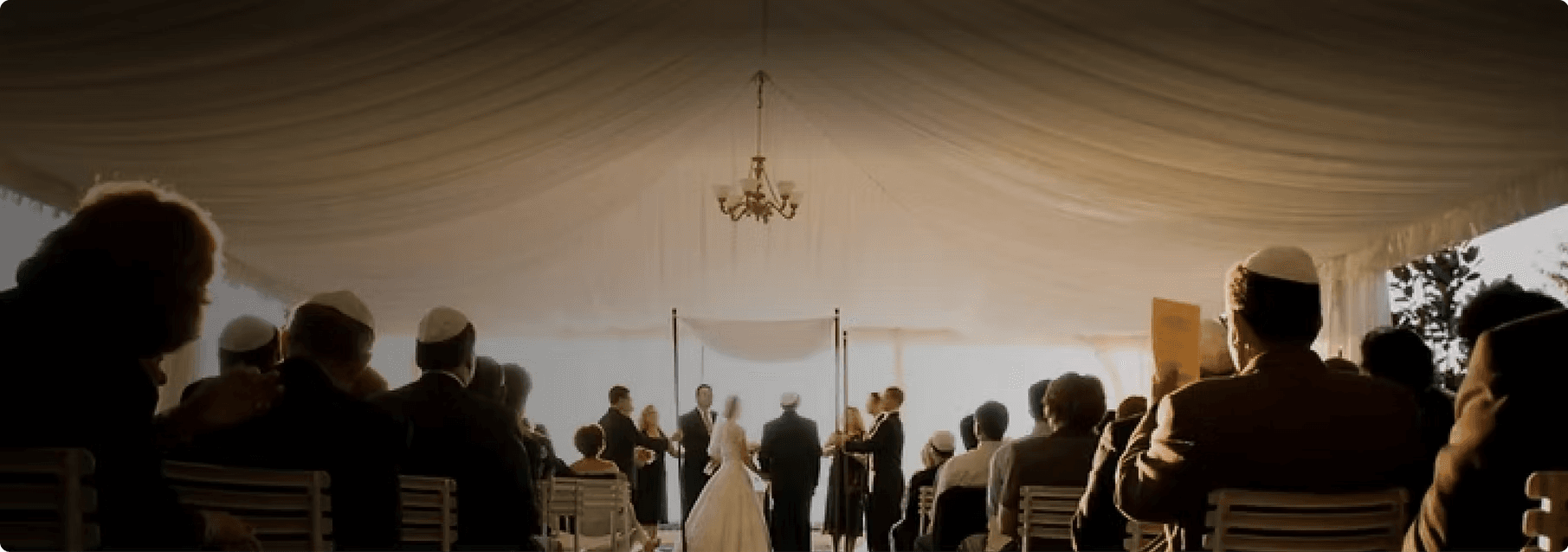
A Jewish wedding is full of meaning, love, and joy. It brings together ancient traditions and happy celebrations. If you're going to a Jewish wedding or planning one, this guide will help you understand each step.

Let’s walk through a traditional Jewish wedding, from the first step to the last. Don’t worry, this guide is easy to follow and full of heart.
Step 1: The Engagement
Before the wedding, there’s the engagement. In Hebrew, this is referred to as “erusin.” Families may throw a party or dinner to celebrate. Sometimes there’s a small blessing or speech. It’s a joyful time. The couple starts dreaming and planning together.
Step 2: Signing the Ketubah
The Ketubah is a Jewish marriage contract. It is not just a piece of paper. It’s a promise. The groom signs it before the ceremony. Two witnesses also signed it. The bride does not need to sign, but she agrees by joining the ceremony.
The Ketubah says how the groom will care for the bride. It is usually written in Aramaic or Hebrew, but some couples also choose English. It is often read aloud during the ceremony.
Later, many couples frame their Ketubah and hang it in their home.
Step 3: The Badeken (Veiling)
This is a special moment. The groom covers the bride’s face with a veil. This shows modesty. It also reminds us of the story of Jacob and Rachel in the Torah. In that story, Jacob was tricked into marrying the wrong bride. The veil helps avoid confusion, but it also shows deep love.
The groom looks at his bride and says, “Yes, this is her.” He then places the veil gently. Family and friends watch. Some may cry happy tears.
Step 4: The Procession
Now the ceremony begins. The guests take their seats. The music starts. The wedding party walks in.
First comes the rabbi or cantor. Then the grandparents. After them, the parents of the bride and groom. Then the wedding party. Finally, the groom walks in with his parents. Last comes the bride, often with both parents walking beside her.
Guests usually stand as the bride enters.
Step 5: The Chuppah
The couple stands under the Chuppah. It is a wedding canopy. It is open on all four sides. This reminds us of Abraham’s tent. He welcomed everyone. The Chuppah shows the new home the couple will build together.
It may be made of cloth, a tallit, or flowers. Some families use a Chuppah that has been passed down through generations.
Standing under the Chuppah is a deep symbol. It says, “We are now one unit. We are home to each other.”
Step 6: Circling the Groom
In many weddings, the bride walks around the groom seven times. This act is called “hakafot.” Seven is a holy number in Judaism.
The circling shows love, protection, and the start of something new. It also means the bride is building a circle of love around her groom.
In modern weddings, sometimes the groom circles the bride, too. Or they may circle each other. It’s up to the couple.
Step 7: The Kiddushin (Betrothal Blessings)
Now the rabbi blesses a cup of wine. Wine is a sign of joy. The bride and groom each take a sip.
The rabbi then says two blessings. One is over the wine. The other is for the betrothal. It thanks God for bringing the couple together.
This moment marks the start of the actual wedding ceremony.
Step 8: The Ring Ceremony
This part is simple but powerful. The groom places a plain gold ring on the bride’s right index finger. He says in Hebrew, “With this ring, you are holy to me.”
This is the key moment when they become married.
In many weddings today, the bride also gives a ring to the groom. She may say her own words of love and promise.
The ring is round, with no end. It shows love that never stops.
Step 9: Reading the Ketubah
Now the Ketubah is read aloud. This shows the couple’s commitment. Everyone listens as the words are spoken.
It may be read in Hebrew, Aramaic, or English. The couple stands together, smiling and holding hands.
The Ketubah is more than a contract. It is a reminder of what love means every day.
Step 10: The Sheva Brachot (Seven Blessings)
These are seven blessings said over a second cup of wine. They talk about joy, love, peace, and creation.
A different guest may read each blessing. Or the rabbi may say them all.
The couple sips the wine again. They are surrounded by words of joy.
These blessings link the couple to the Jewish people, to the world, and to each other.
Step 11: Breaking the Glass
Now comes a loud and famous moment. The groom steps on a glass wrapped in cloth. It breaks with a sharp sound.
Everyone yells “Mazel Tov!” That means “Good luck” or “Congratulations!”
But why break the glass?
It reminds us that even in joy, we remember sadness. Some say it recalls the Temple in Jerusalem being destroyed. Others say it shows that life is not perfect, but love can help us through.
The sound of the glass breaking marks the end of the ceremony and the start of the party.
Step 12: Yichud (Time Alone)
Right after the ceremony, the couple goes into a private room. This is called “Yichud,” which means “togetherness.”
They stay there for a few minutes, alone for the first time as a married couple. They may eat a quick bite, talk, or just rest.
This quiet time is very special. It’s a pause before the big celebration begins.
Step 13: The Reception
Now it’s time to dance, eat, and celebrate. There’s usually a meal, music, and lots of joy.
One big dance is the Hora. The guests lift the bride and groom in chairs. They dance in circles. It’s full of laughter and energy.
There may be speeches, blessings, or toasts. Some weddings also include more Sheva Brachot during the meal.
The goal is simple: pure joy.
Step 14: The Mitzvah Dance
In some weddings, especially in Orthodox groups, there's a Mitzvah Dance. This is when guests take turns dancing before the bride and groom.
Sometimes, a long belt or scarf is held between the dancer and the bride. This way, they do not touch but still connect.
It is a way to honor the couple and bring more joy to their day.
Step 15: After the Wedding
The celebration doesn’t always end in one day. In some traditions, the couple continues celebrating with friends and family for seven days. These are called “Sheva Brachot” meals. Each night, a meal is held in honor of the couple. The seven blessings are said again.
It helps keep the love and joy going.
Jewish Wedding Symbols You Might See
Wine – For joy and blessings
Chuppah – A symbol of the couple’s new home
Rings – Simple and round, showing unending love
Broken Glass – A moment of memory and meaning
Ketubah – The written promise between bride and groom
Final Thoughts
A traditional Jewish wedding is filled with love, meaning, and joy. Each step, from the Ketubah to the breaking of the glass, carries deep purpose. These moments connect the couple to each other, to their families, and to generations past. Whether you're planning a wedding or simply attending one, knowing the meaning behind each tradition makes the day even more special.
It’s not just a ceremony, it’s a celebration of unity, faith, and hope for the future. With music, blessings, and heartfelt joy, a Jewish wedding is a memory that lasts a lifetime. Mazel Tov to every happy couple!
Want to make your celebration unforgettable? The Shuk Music Group brings the energy, soul, and tradition of Jewish music to life. From under the chuppah to the hora, we keep the joy flowing. Book us today and let your wedding sing.
Mazel Tov!
FAQs
1. What is a Chuppah, and why is it important?
A Chuppah is a canopy the couple stands under during the ceremony. It symbolizes the home they will build together.
2. Why does the groom break a glass at the end of the ceremony?
The glass is broken to remind us of the destruction of the Temple in Jerusalem. It also shows that even in joy, we remember sadness.
3. What is a Ketubah?
A Ketubah is a Jewish marriage contract. It outlines the groom’s responsibilities and is signed before the ceremony.
4. What are the Seven Blessings (Sheva Brachot)?
These are blessings said during the ceremony to honor love, joy, creation, and the couple’s future. They are often shared by family or friends.
5. What is Yichud, and why does it happen after the ceremony?
Yichud means “together.” It’s a short, private time after the ceremony where the couple is alone for the first time as husband and wife.
6. Does the bride always walk around the groom?
In traditional weddings, yes, usually seven times. But many couples today choose to circle each other, or skip it. It’s up to them.


